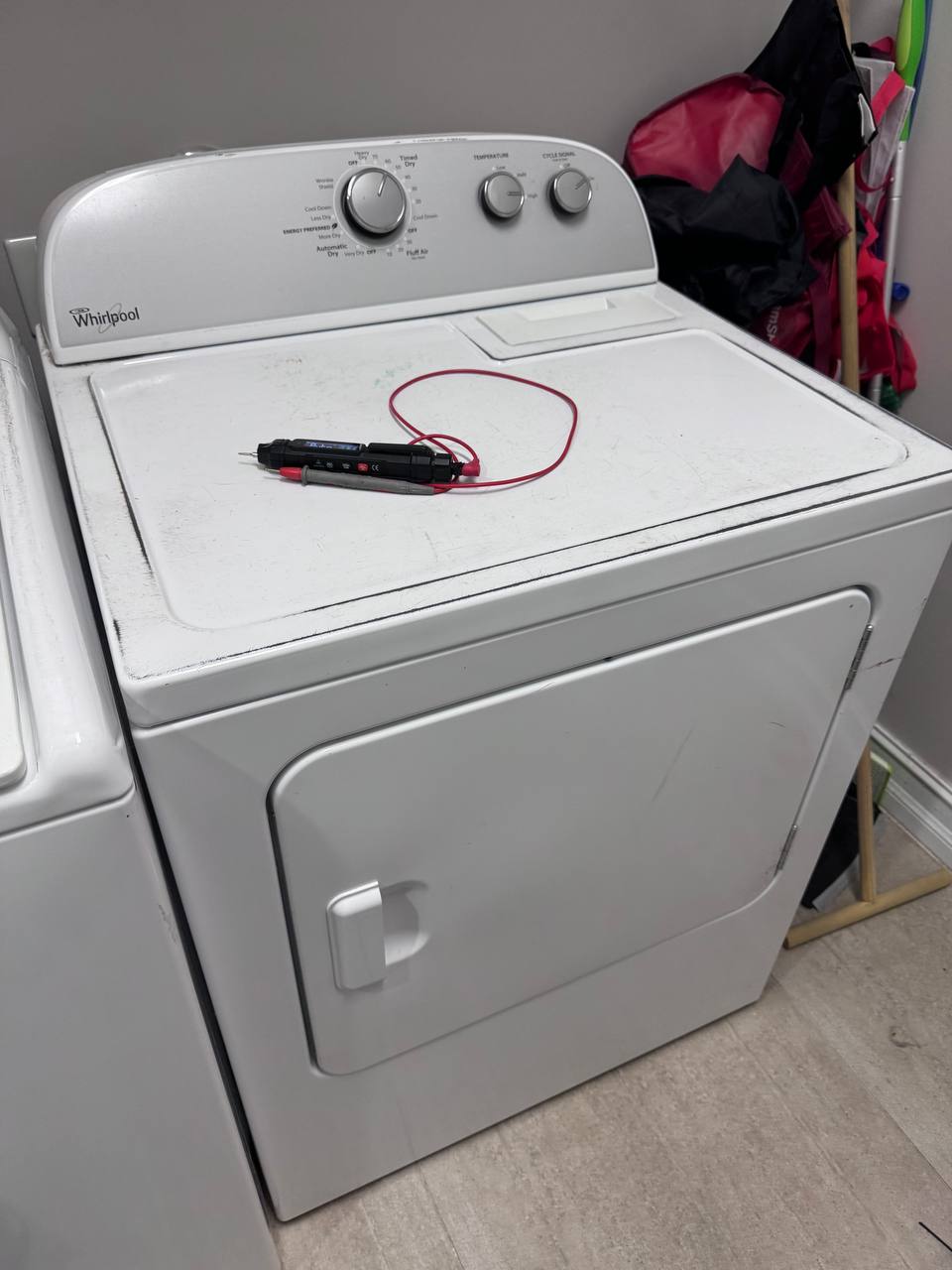
The Call: Whirlpool Dryer Tumbles but Stays Cold
A homeowner in Davie, FL reached out to iFixExpress when their Whirlpool electric dryer suddenly stopped producing heat. The drum was spinning, the cycle timer was advancing, and the motor ran normally, but laundry was coming out damp and cold after repeated 60-minute cycles.
When an electric dryer runs without heat, the common suspects include a broken heating element, a cycling thermostat failure, or an open safety fuse. We arrived with a fully stocked service truck, prepared to isolate the exact failure point on-site.
Diagnostic Steps: Finding the Failed Component
Power & Heating Element Check
We disconnected the power supply and accessed the rear panel. Using a digital multimeter, we first checked the heating element coil for continuity and physical breaks. The element showed intact coils and registered proper resistance (approximately 10 ohms), ruling out heater burnout.
Thermal Fuse Continuity Test
We moved our probes to the blower housing thermal fuse. The meter displayed infinite resistance (open circuit). The fuse had tripped permanently, shutting off the burner circuit to protect the appliance from dangerous internal overheating.
High-Limit Thermostat Inspection
Because thermal fuses blow in response to extreme temperatures, the high-limit thermostat on the heater housing is frequently heat-stressed during the same event. Best practice demands replacing this companion safety control to prevent immediate repeat failures.
The Root Cause: Airflow Restriction
A thermal fuse rarely fails on its own without an underlying cause. In modern Whirlpool dryers, the thermal fuse on the exhaust housing triggers when exhaust temperatures exceed design limits—almost always the result of a clogged or crushed exterior vent line.
Technician Note: Replacing a blown thermal fuse without cleaning a choked dryer vent will cause the new fuse to blow within a few cycles. Heavy lint buildup traps scorching air inside the cabinet, creating a serious fire hazard.
The Solution and Same-Day Completion
We installed an OEM Whirlpool thermal fuse alongside a brand-new high-limit thermostat. We vacuumed residual lint from the internal blower wheel and lower cabinet floor before securing the rear access panel.
We ran a timed test cycle on high heat. Within 45 seconds, the heating element engaged, hot air began moving through the blower housing, and amperage draw remained within factory tolerances.
Before wrapping up, we showed the homeowner the heavy lint accumulation around the exhaust transition pipe and strongly recommended hiring a professional dryer duct cleaning service before running heavy laundry loads.