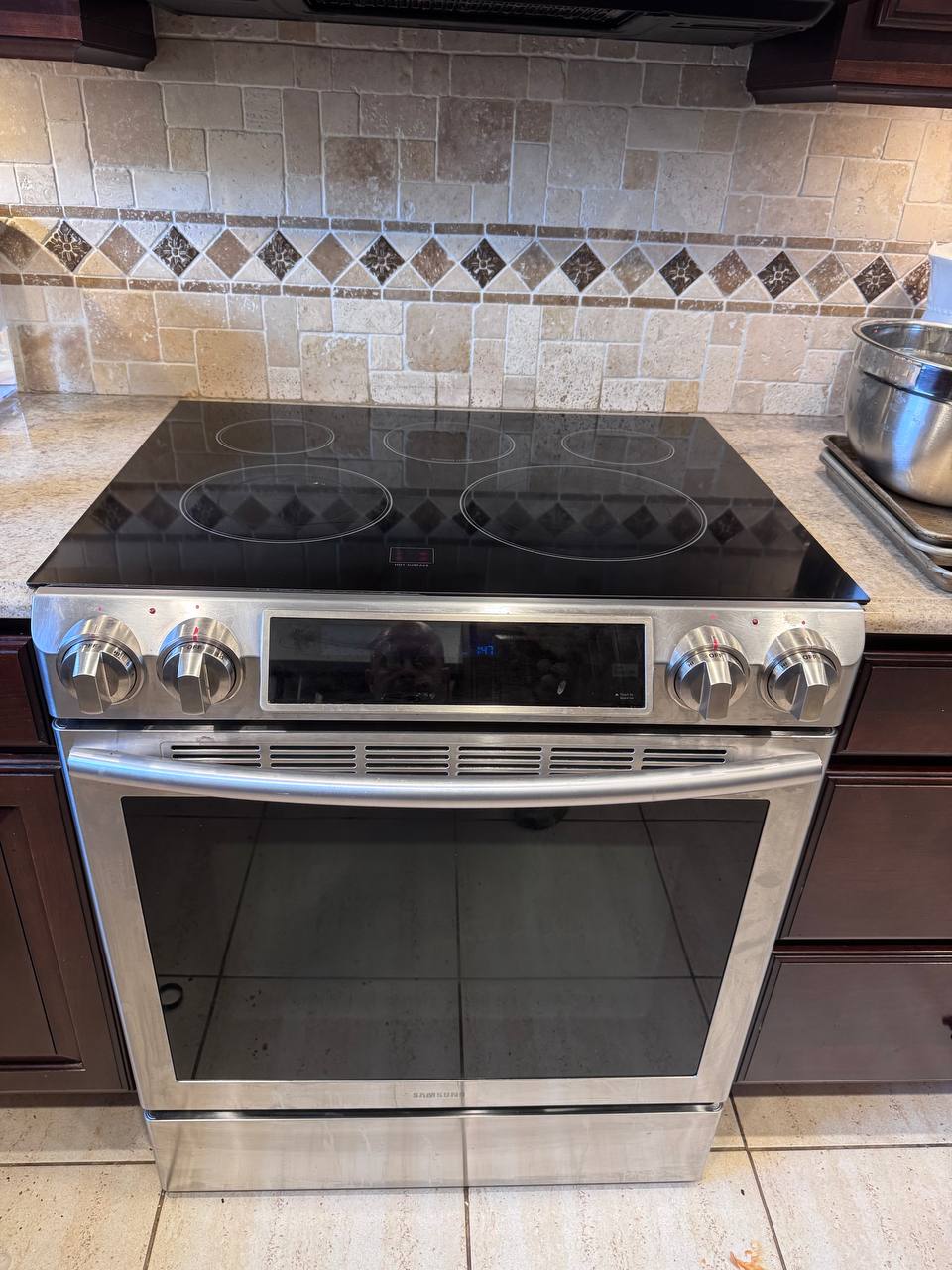
A homeowner in Dania Beach reached out to iFixExpress after an evening cooking accident left their kitchen without a working stove. While boiling soup, a vigorous boilover sent liquid across the glass cooktop. Almost immediately, there was an audible pop, a quick flash under the control console, and the kitchen 240V double-pole circuit breaker tripped. Resetting the breaker immediately caused it to trip again—a classic symptom of a dead short to ground.
Initial Safety Inspection and Disassembly
When working on high-voltage cooking appliances with moisture exposure, personal safety is the primary priority. Before touching the chassis, our technician verified that power was fully isolated at the electrical panel.
Power Verification
Verified zero voltage across L1, L2, and Neutral with a digital multimeter before removing access panels.
Surface Teardown
Removed the surface burner retaining clips and lifted the main ceramic glass assembly to expose the sub-chassis.
Tracing the Moisture Path
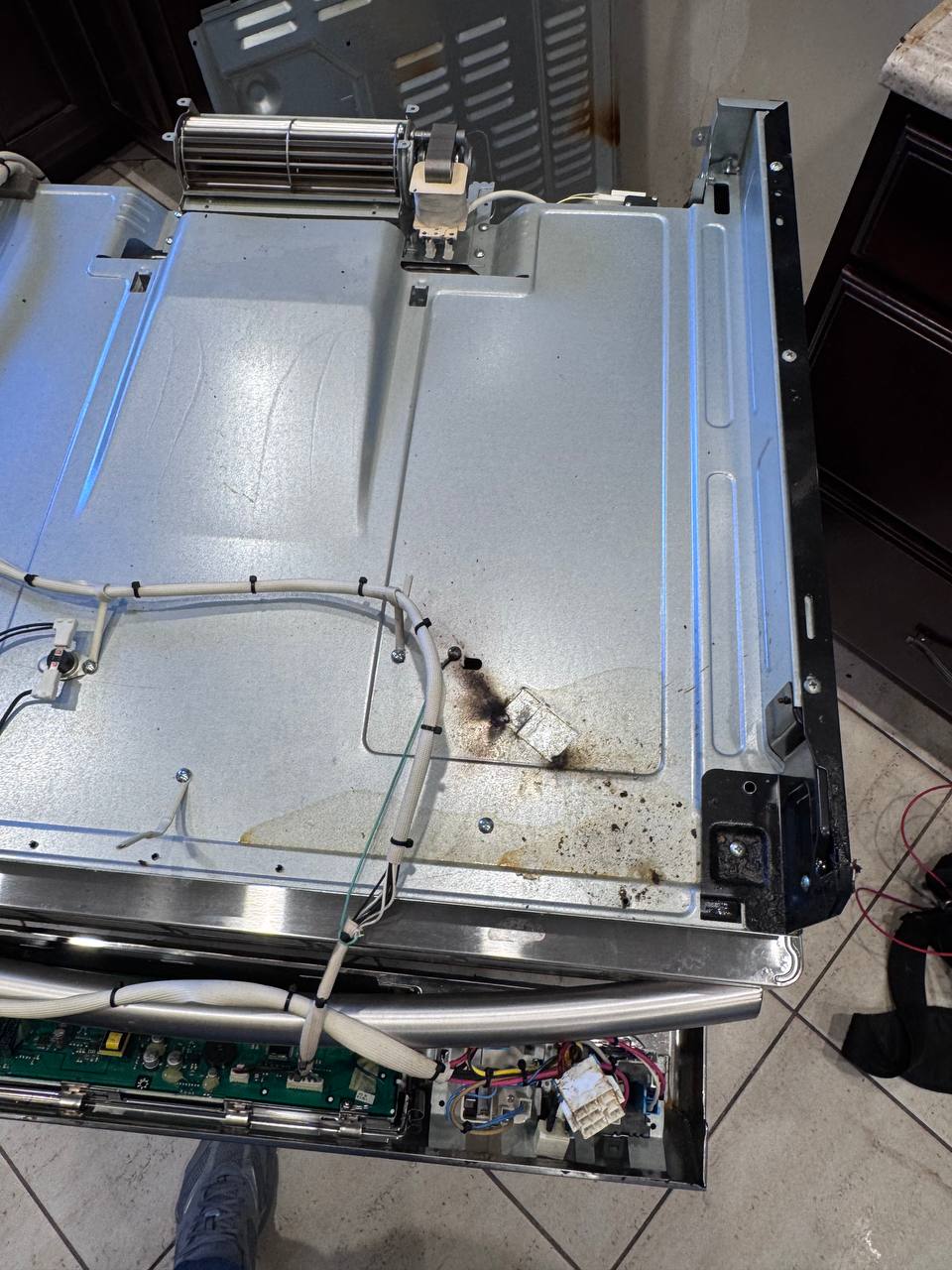
Followed liquid residue marks that had seeped between the front stainless steel control lip and the glass cooktop frame.
Locating the Shorted Harness
Samsung electric ranges place several main harness distribution plugs directly beneath the junction where the ceramic glass meets the front console assembly. In this unit, the factory foam gasket had degraded over years of steam exposure, allowing the salty broth to bypass the perimeter seal.
The liquid pooled directly into a multi-pin harness connector feeding the infinite surface element switches. Salt and water acted as an immediate conductor across the terminals, generating an electrical arc that carbonized the nylon plastic housing and welded one of the line conductors directly to the grounded steel sub-frame.
Safety Warning: Never force a circuit breaker back on if it trips immediately upon reset. A dead short to ground can cause catastrophic fire damage or melt internal wire harnesses beyond repair.
Component Restoration & Waterproofing
Rather than requiring the homeowner to wait several days for an entire wiring assembly back-order, the localized damage was serviceable on-site:
- Connector Reconstruction: Removed the scorched plastic terminal casing, descaled the copper contact pins, and replaced damaged terminal leads with high-temperature heat-resistant wiring.
- Insulation: Sealed each lead individually using dual-wall adhesive-lined heat shrink tubing rated for high-temperature appliance environments to ensure total moisture resistance.
- Deep Cleaning: Dried and sanitized the interior sheet metal to eliminate corrosive salts and food residue that could lead to tracking currents.
- Preventative Perimeter Sealing: Cleaned the interface between the front console and the cooktop glass. Laid down a bead of high-temperature RTV silicone sealant to eliminate the gap and permanently stop future surface boil-overs from entering the electronic compartment.
Testing and Verification
With the harness insulated and routed securely into the chassis channels, the cooktop was remounted. Power was safely restored at the breaker box. Each radiant burner, the hot-surface indicator lights, and the digital oven control panel were tested through complete heating cycles. Amperage draw on each leg remained strictly within OEM factory specifications with zero leakage current to ground.