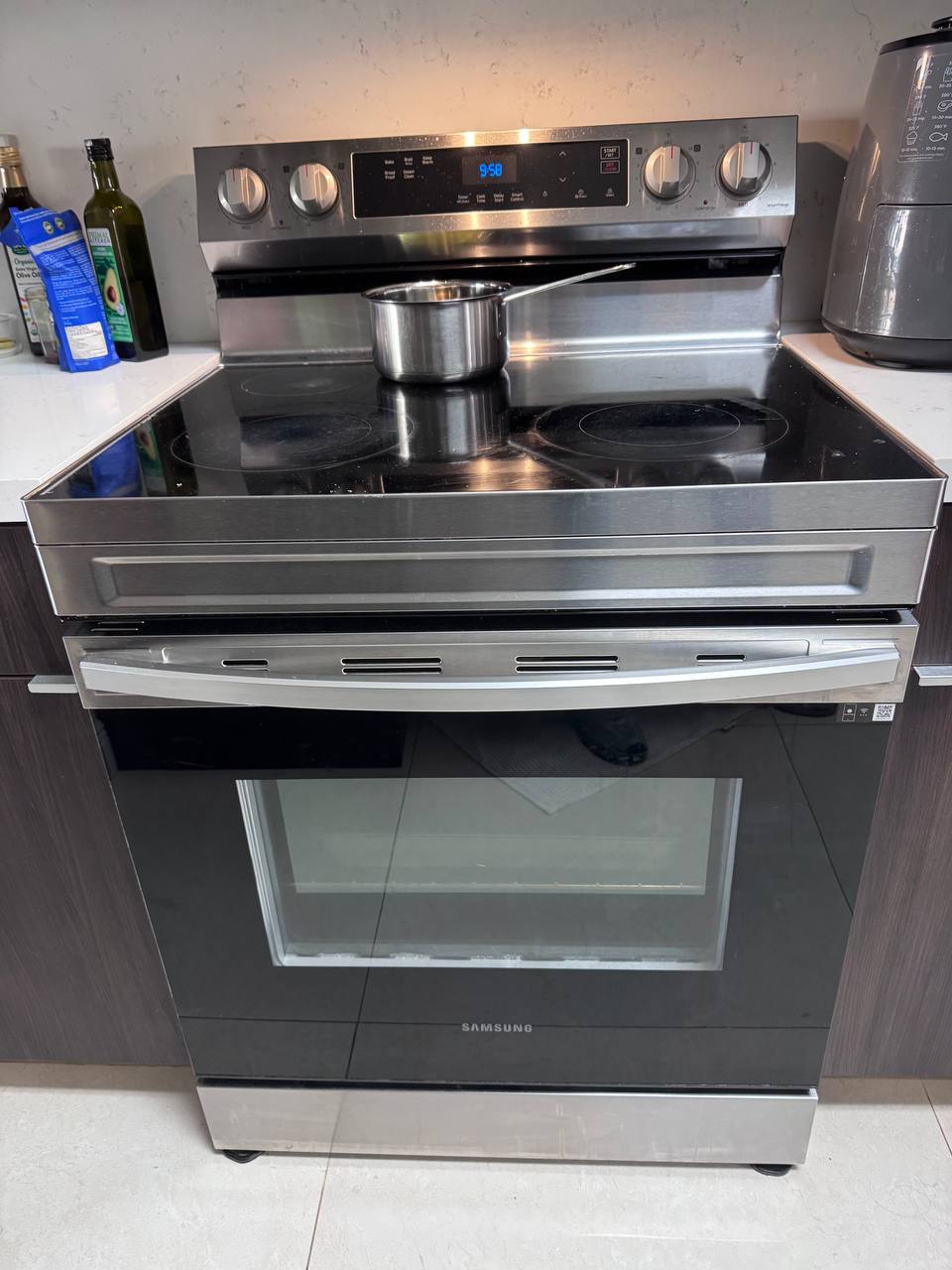
A homeowner in Miramar reached out to iFixExpress when preparing dinner became a high-stakes challenge. Their primary right-front burner on a Samsung electric range was running at full blast no matter where the knob was turned—even on the lowest simmer setting. After scorching two pots of rice, they knew it was time to call in a professional technician.
The Service Call in Miramar
When an electric radiant element fails to adjust its heat output, safety becomes an immediate concern. A burner stuck on maximum temperature poses a fire hazard, risks thermal shock to ceramic glass cooktops, and ruins cookware. We scheduled a same-day visit to inspect the range.
Safety Warning: A stove burner stuck on high heat can reach temperatures exceeding 1,200°F. If you notice an element glowing cherry red on a low setting, stop using the burner immediately and disconnect power at the circuit breaker.
Diagnosing the Runaway Burner
Modern electric cooktops use radiant surface elements controlled by an infinite switch (often referred to as an energy regulator). Rather than varying voltage, the infinite switch cycles the 240V power on and off using an internal bimetallic strip and contact points. The dial position determines the duty cycle.
The Fix: Infinite Switch Replacement
Because the contacts inside the infinite regulator were physically welded together, repairing the switch was neither possible nor safe. The component required a direct OEM replacement.
We disconnected the wire harness one lead at a time, transferring them to the correct terminals on a brand-new Samsung OEM infinite control switch to ensure exact pin-to-pin alignment. Once mounted to the console bracket, the knob was reseated, the back panel fastened, and the range slid back into position.
We restored power and tested the burner across low, medium, and high settings. The switch properly cycled power on and off at low settings, cycling off to maintain a gentle simmer just as designed.
Why Do Infinite Switches Fail?
Every time you turn on a cooktop element, electrical current arcs slightly across the mechanical contacts inside the switch. Over years of regular cooking—especially on a household's most frequently used burner—this repeated arcing causes pitting, carbon buildup, and localized heat. Eventually, the metal contacts weld together, locking the circuit in the "always on" position.