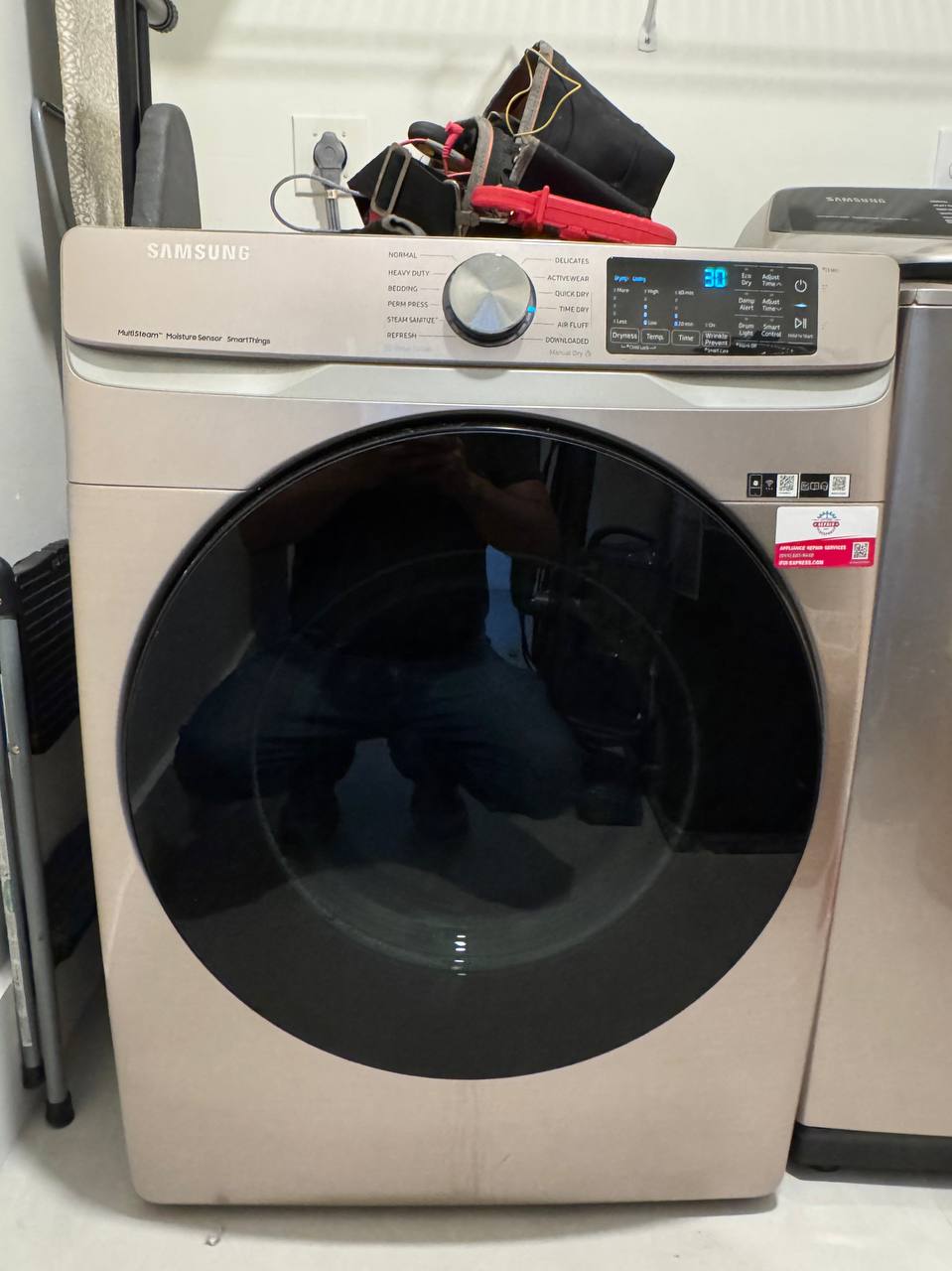
A local homeowner in Weston called iFixExpress frustrated that their Samsung dryer was taking two to three full cycles just to dry a normal load of laundry. Convinced the heating element or control board was failing, they were already considering browsing local appliance stores for a brand-new replacement dryer. However, before spending hundreds of dollars on a new machine, they decided to get a professional diagnosis from our technician team.
Initial Diagnostic: Testing Machine Components
When arriving at the Weston home, our technician began with a systematic diagnostic of the dryer itself to isolate mechanical or electrical faults.
Heating Element & Thermostat Checks
We verified resistance across the heating element coil, thermal cut-off fuse, and high-limit thermostat. All multimeter readings matched factory specifications perfectly.
Motor & Blower Wheel Test
We ran a quick test cycle. The drum rotated normally, and the internal blower wheel was spinning properly without slippage or damage to the vanes.
Exhaust Duct Inspection
With the machine operating flawlessly, we disconnected the flexible transition duct behind the dryer to inspect the external venting route.
Uncovering the Problem: Clogged Duct & Trapped Condensation
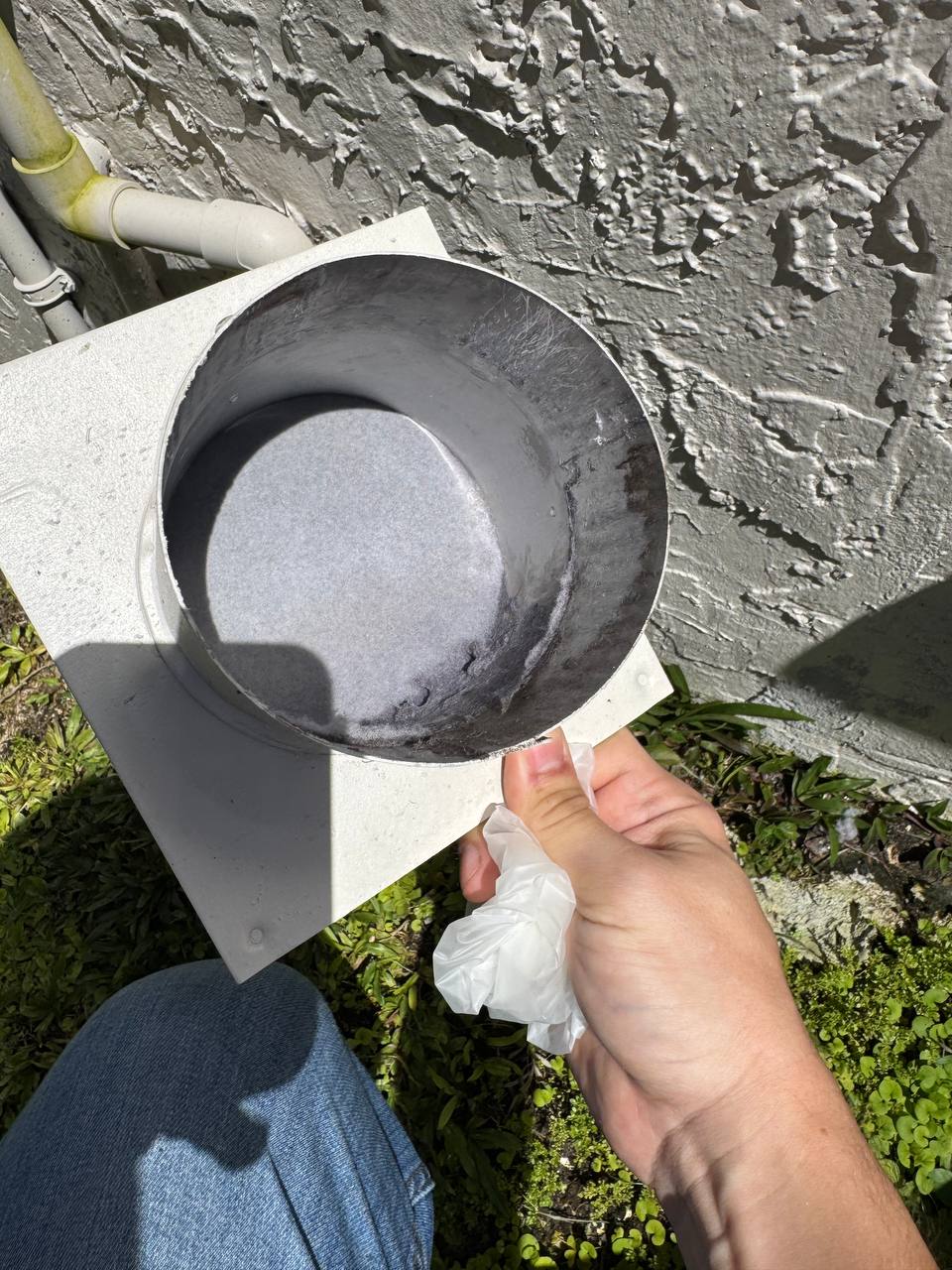
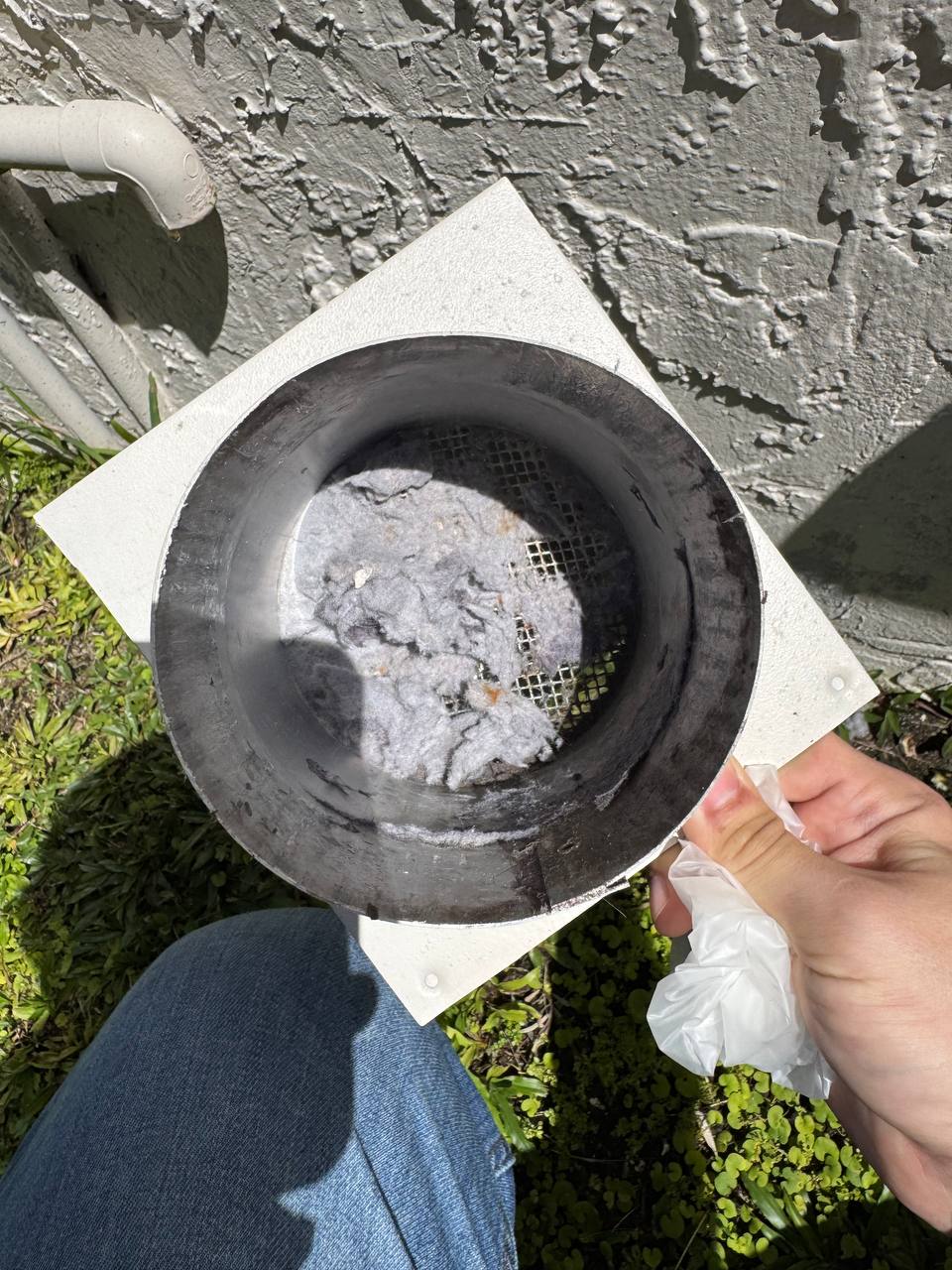
The moment we pulled the flexible foil transition pipe away from the wall exhaust, the true culprit was revealed. Heavy lint accumulation had created a dense plug inside the venting wall pipe. Because moisture-laden hot air could not escape outside, it cooled down and stagnated inside the flex hose, resulting in accumulated standing water from condensation.
This trapped water and lint buildup severely choked the air velocity. The Samsung dryer's moisture sensors were correctly picking up wet clothes, keeping the dryer running indefinitely, but without proper exhaust ventilation, wet air simply recirculated inside the drum.
The 20-Minute Solution
Our technician thoroughly cleared the wall vent duct blockage, safely removed the condensation water, cleaned the flexible transition connector, and verified strong outdoor air discharge at the exterior wall cap. The entire job took roughly 20 minutes from start to finish.