The Call: Clothes Still Damp After Long Cycles in Miramar
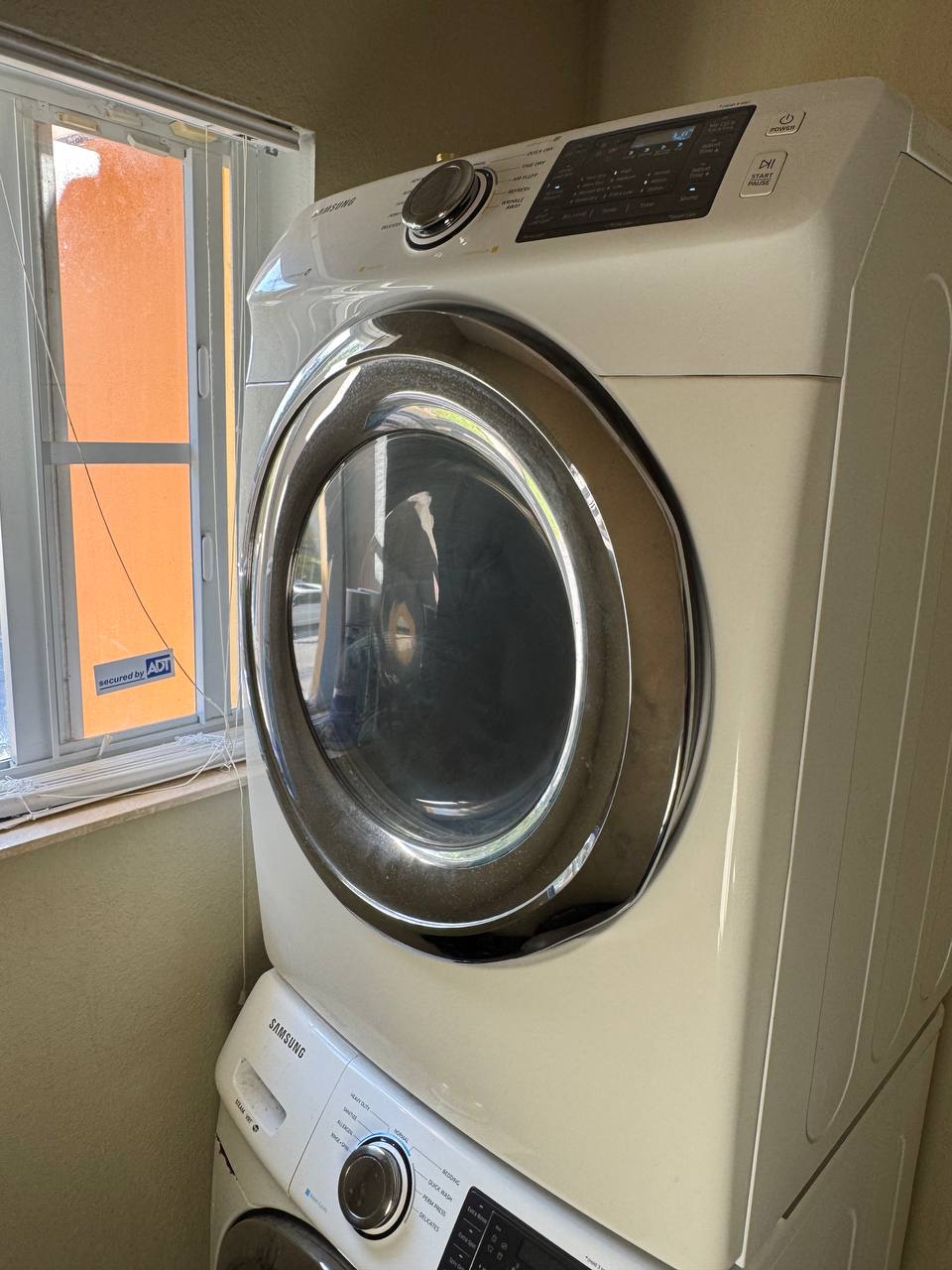
We received a service request from a rental property in Miramar, Florida. The tenants reported that their Samsung clothes dryer was taking multiple full cycles to dry a single load of laundry. Clothes were coming out damp and warm, leading them to suspect a failing heating element or a faulty thermostat. I arrived on site promptly to evaluate the appliance and restore proper drying performance.
Diagnostic & Troubleshooting Steps
Initial Cycle Test
I started a standard timed dry cycle. After running for a few minutes, I opened the door and confirmed the drum interior felt hot, indicating the heating element and thermal fuse were operating correctly.
Transition Duct & Airflow Check
Next, I inspected the rear transition duct connecting the dryer to the wall exhaust vent. Despite the interior chamber heating up rapidly, the transition duct remained cool to the touch—a clear signal that thermal energy was trapped inside and air was not flowing outward.
Exhaust Disconnection
I detached the rear transition duct to check for restriction or ductwork collapsing. With the exhaust wide open, I ran the unit again; surprisingly, virtually zero air was blowing out from the dryer’s blower housing.
Lint Screen Inspection
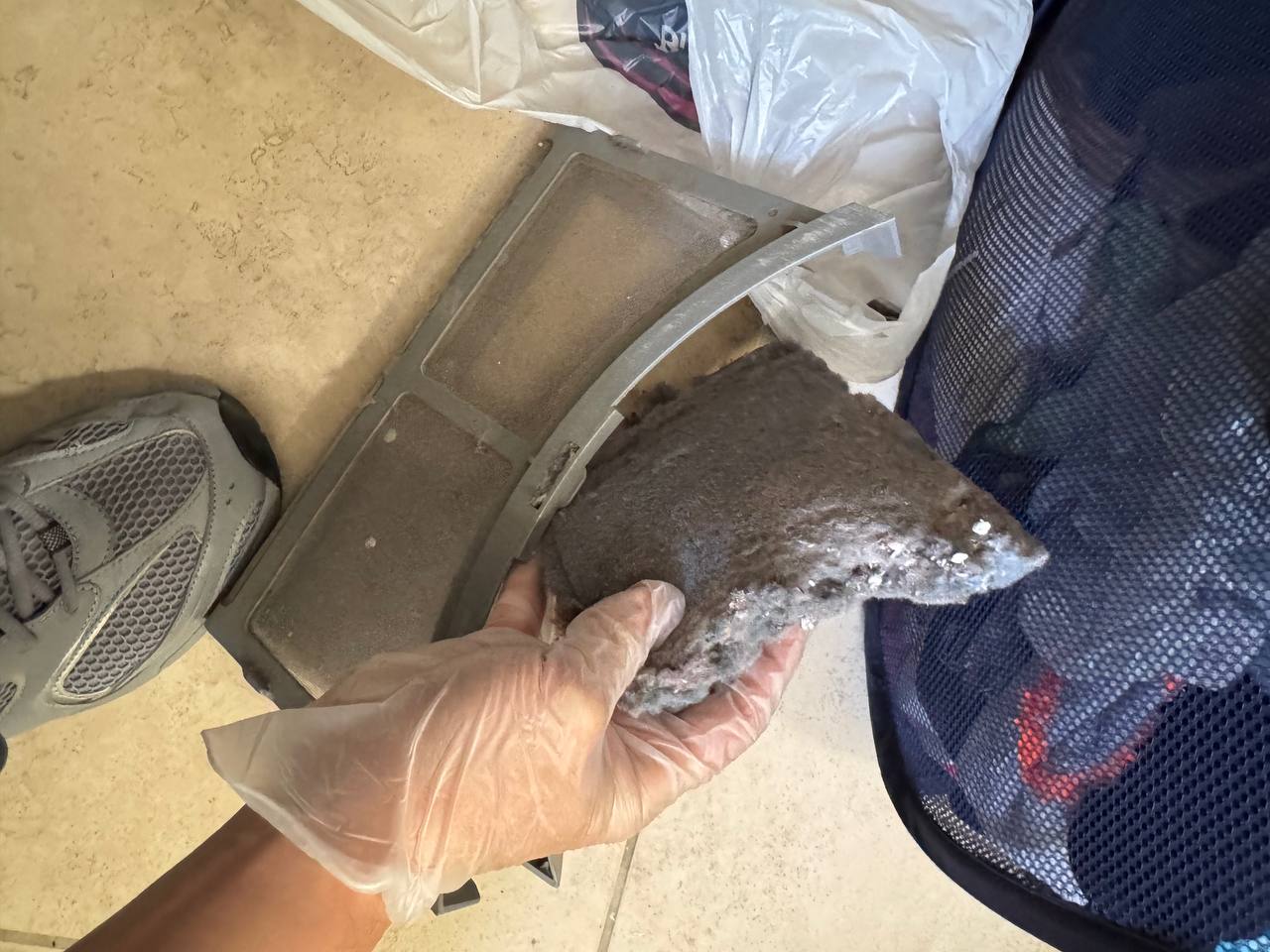
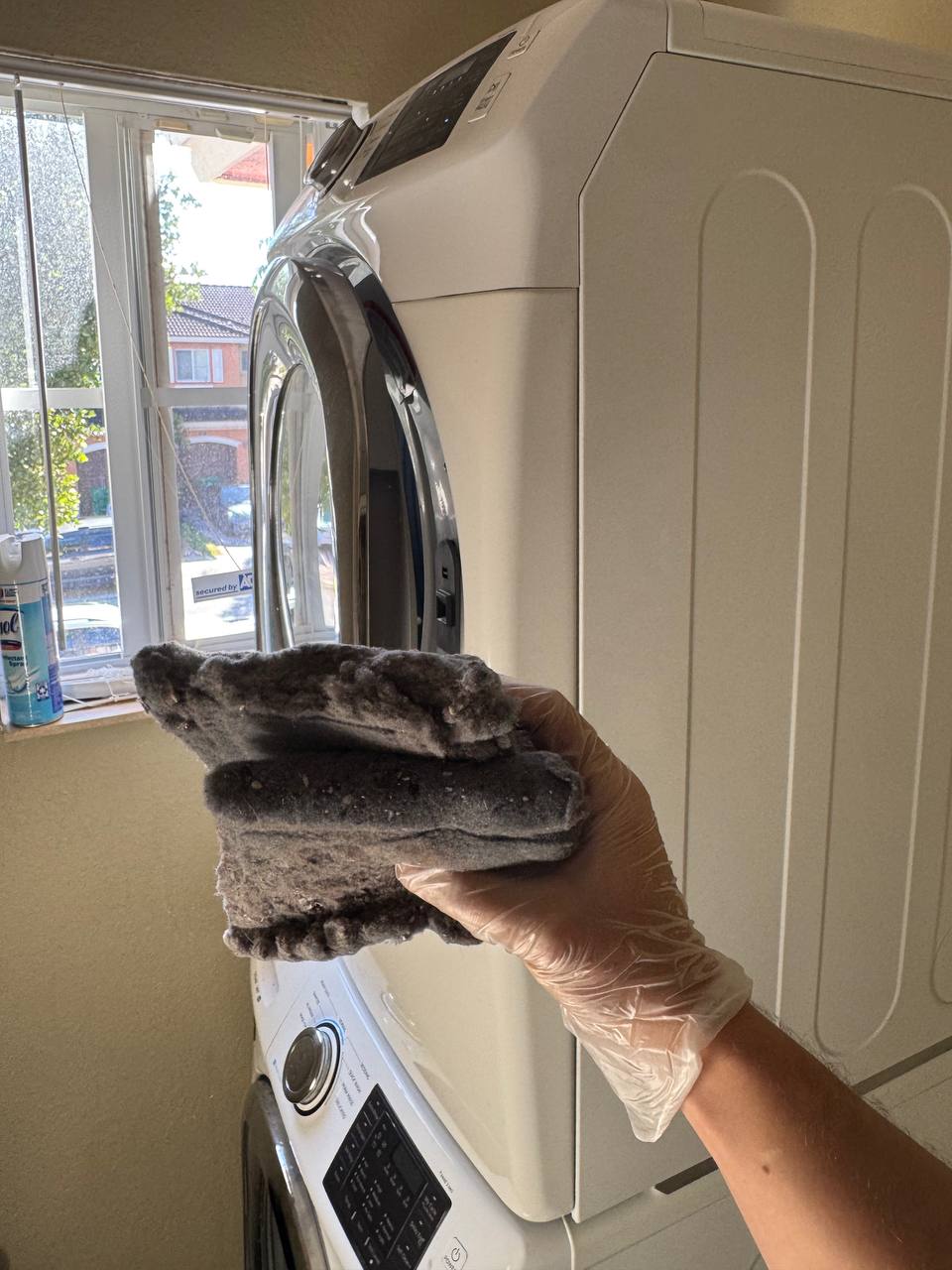
I pulled the front lint filter housing out to inspect the screen. The screen was choked with a solid, felting layer of lint several inches thick, completely blocking the airflow intake channel.
The Discovery & Client Education
Upon removing the compacted sheet of lint, I asked the tenants when the filter had last been cleaned. They explained they had lived in the Miramar residence for over a year and were unaware that the lint screen needed to be emptied between drying cycles.
Because the intake was completely choked off, the blower wheel could not push moist, warm air out through the exhaust vent. The moisture was simply trapped inside the drum, baking the clothes without drying them and creating a severe fire hazard.
Resolution & Outcome
I thoroughly cleaned the lint screen and housing, reconnected the rear transition duct, and restarted the Samsung dryer. Instantly, strong, hot airflow surged through the rear exhaust system. I provided the tenants with a quick hands-on tutorial on removing and emptying the lint trap before every single load of laundry.