The Call: A Familiar Heating Failure
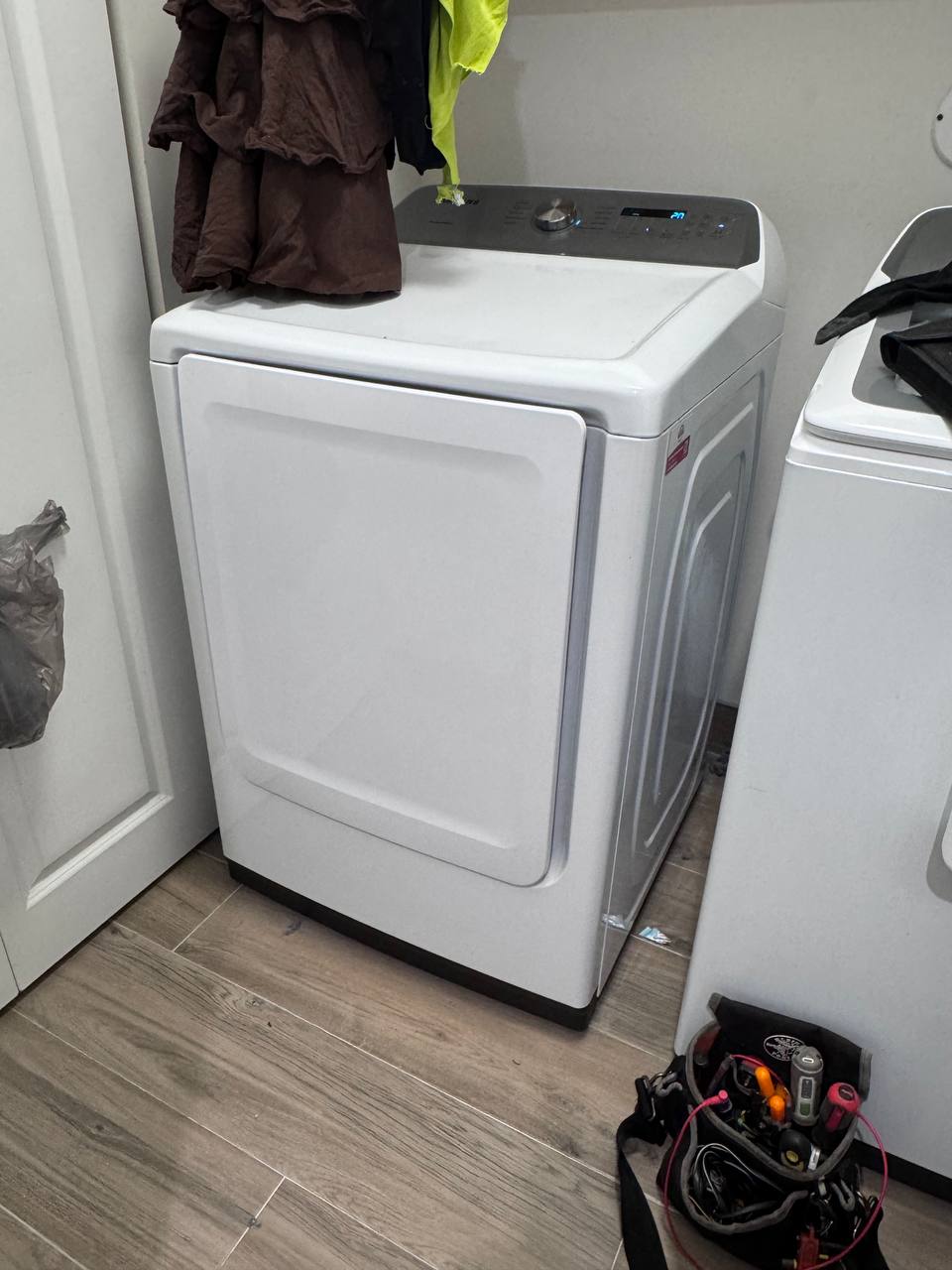
A homeowner in Southwest Ranches contacted iFixExpress reporting that their Samsung electric dryer was tumbling clothes normally but failing to produce any heat. Checking our service records, we noted that we had serviced this exact appliance about twelve months ago for the same symptom. At that time, we replaced a burned-out heating element and explicitly advised the client to have their exterior dryer duct professionally cleaned due to restricted airflow before running another load.
Unfortunately, the recommendation had been put on hold, and the dryer continued to run connected to a heavily restricted exhaust path over the past year. When electric dryers cannot expel hot air, the heat builds up inside the element housing, causing premature failure of the nickel-chromium heating coils.
Diagnostic Testing: Measuring Back Air Pressure
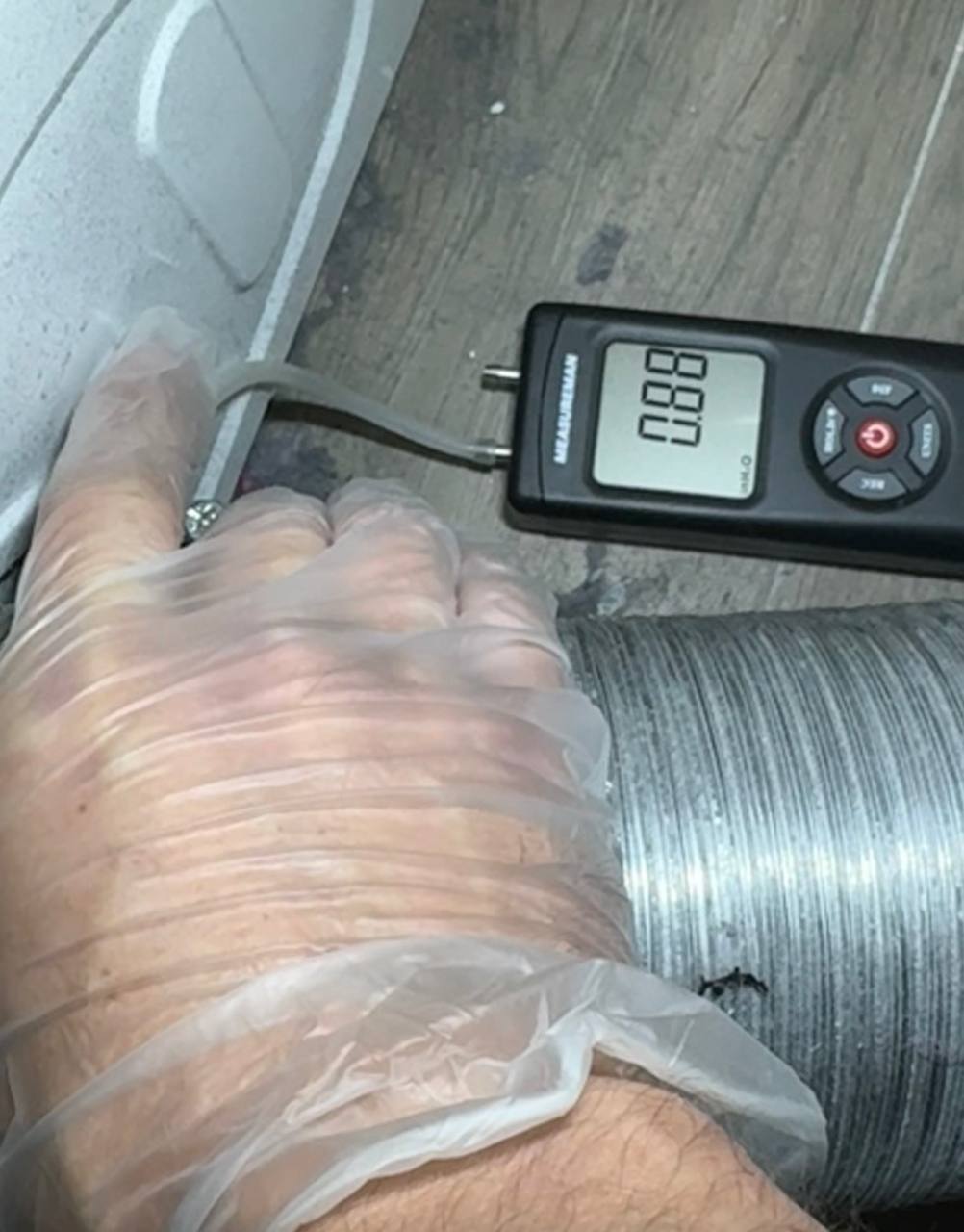
Before disassembling the appliance, our technician attached a digital manometer pressure gauge directly to the exhaust duct to measure back air pressure during operation. The results immediately confirmed the root cause of the repeat burnout:
Baseline Pressure Check
Connected a specialized manometer to measure static exhaust back pressure while the dryer fan was running.
Exceeding Safety Thresholds
The meter registered 0.88 inH2O. The maximum allowable exhaust pressure for standard electric dryers is 0.60 inH2O. A reading of 0.88 inH2O indicates a near-total block in the ductwork.
Inspecting the Heating Element
Disassembled the Samsung dryer chassis and confirmed the heating element wire was snapped open due to extreme thermal fatigue caused by restricted heat dissipation.
The Repair & Prevailing Advice
To restore function to the dryer, we installed a new, genuine Samsung heating element assembly and verified continuity across the high-limit thermal fuses and thermostat controls. Once reassembled, the unit produced hot air immediately, but the core issue remained in the home's exhaust duct.
We showed the customer the live pressure reading on our manometer and demonstrated how severe the airflow restriction was. Replacing the element restores heat, but running the appliance with 0.88 inH2O back pressure will inevitably burn out the new component again and creates a serious fire hazard. The homeowner was strongly advised to refrain from heavy dryer usage until a duct cleaning specialist clears the line.