An Oakland Park homeowner contacted iFixExpress reporting that their French-door LG refrigerator had stopped producing ice. While the fresh food compartment and main freezer seemed to be holding temperature reasonably well, the ice bin remained completely empty. A prompt dispatch was scheduled, and our technician arrived equipped to diagnose this common refrigeration issue.
The Diagnosis: Checking Temperatures and Mechanics
To pinpoint the exact cause of the failure, our technician performed a systematic diagnostic check of both the mechanical and thermal systems of the LG refrigerator:
1
Ice Room Temperature Check: The temperature inside the dedicated ice maker compartment was measured at 15°F. While freezing, this is slightly too warm for the LG control board to consistently trigger the ice-making cycle, which typically requires temperatures closer to 0°F to 8°F.
2
Force Harvest Test: The technician initiated a manual force harvest test on the ice maker assembly. The unit successfully cycled, rotated, and returned to its home position, confirming that the ice maker motor, gears, and internal thermostat were mechanically and electronically sound.
3
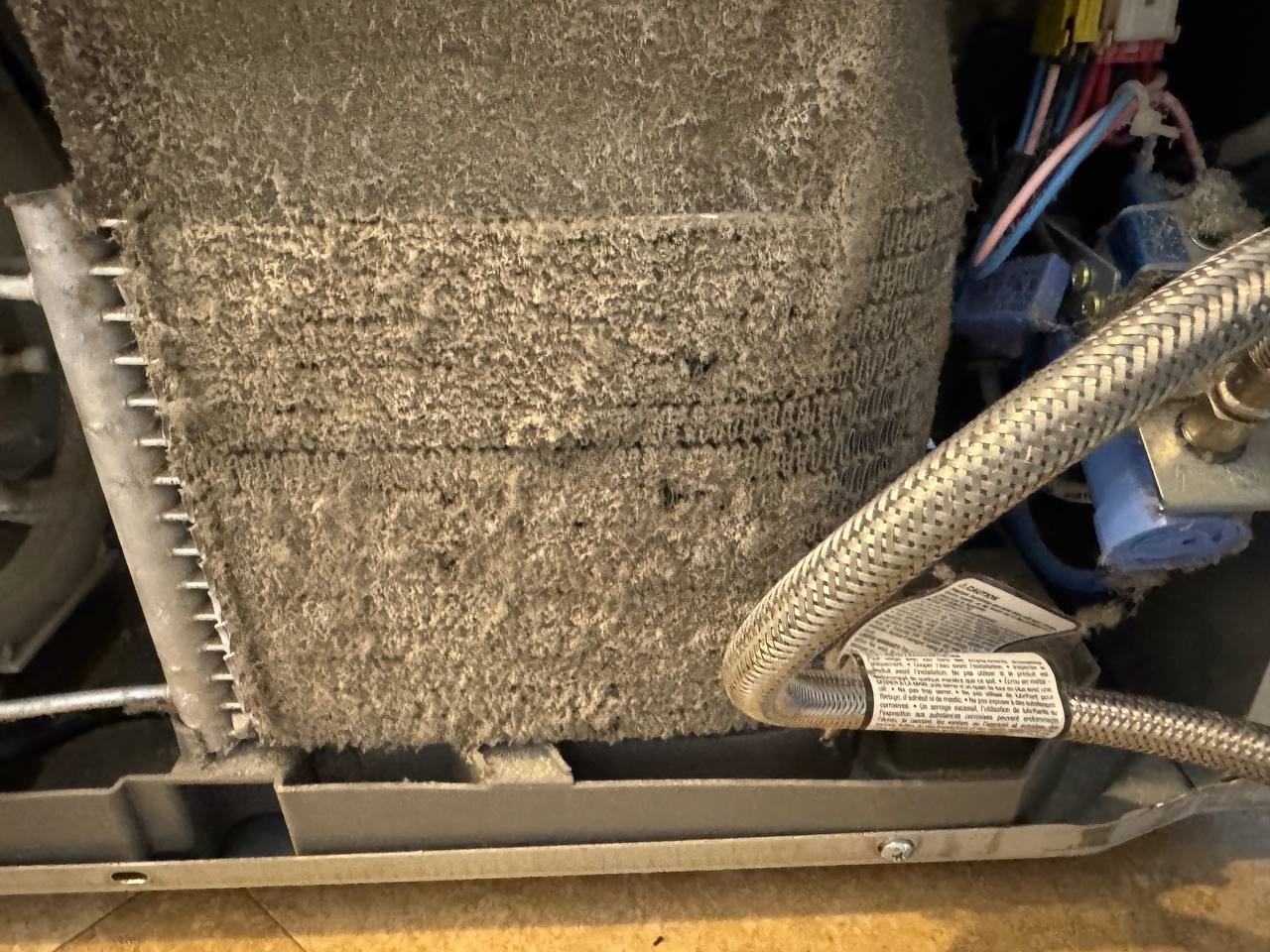
Condenser Coil Inspection: Moving to the rear of the appliance, the technician removed the lower access panel and discovered that the condenser coils were heavily caked with household dust and pet hair. This debris was insulating the coils, preventing the refrigerator from shedding heat efficiently.
The Solution: Restoring Thermal Efficiency
Because the ice maker mechanism itself was fully functional, the root cause was determined to be poor heat dissipation. The dirty condenser coils forced the compressor to work harder and run hotter, preventing the refrigerator from reaching the ultra-low temperatures required in the ice compartment to cycle the ice maker.
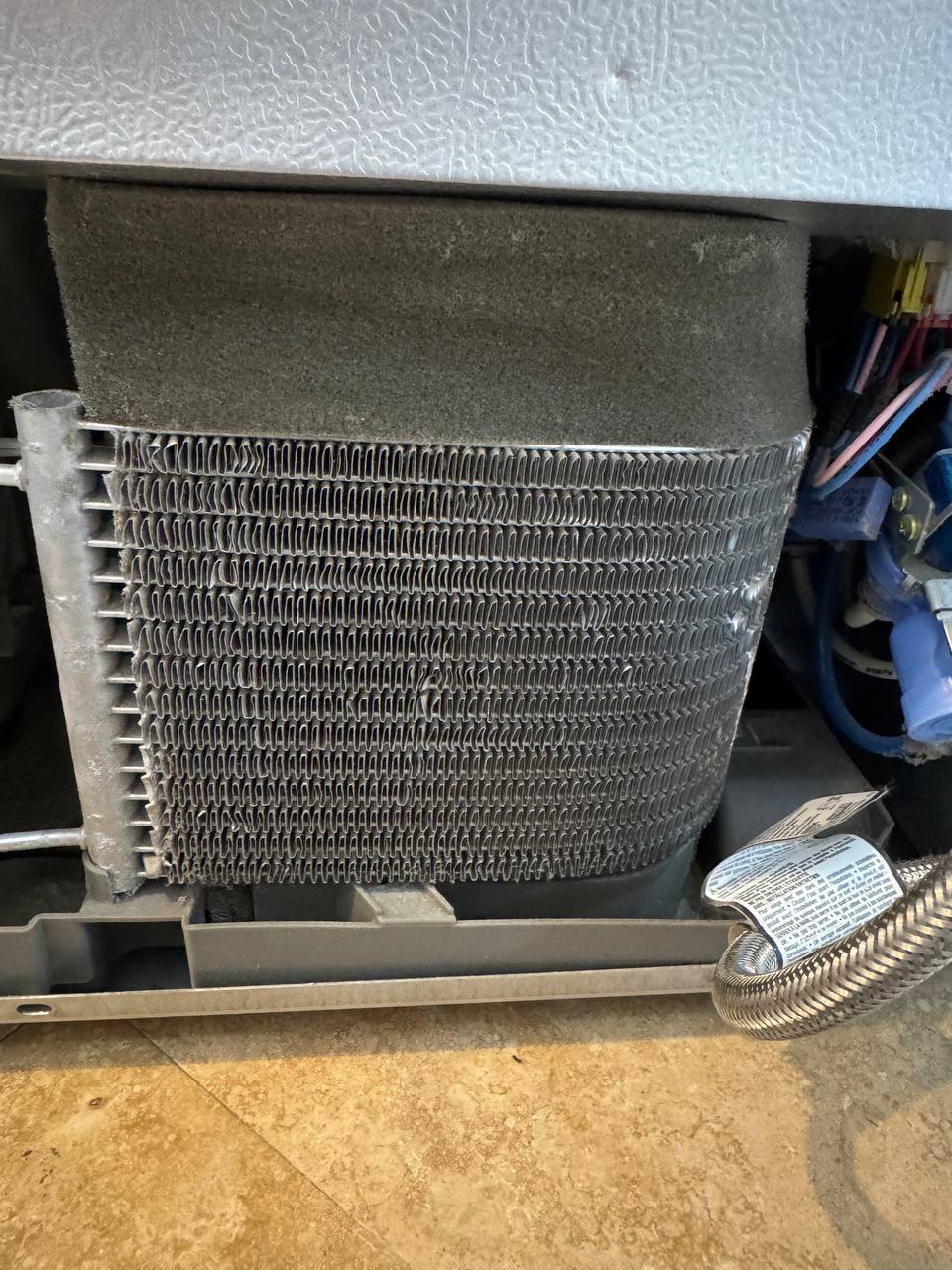
Our technician thoroughly vacuumed and brushed the condenser coils, clearing away all dust and debris to restore optimal airflow. After cleaning, the rear panel was reinstalled, and the refrigerator was powered back on. The customer was advised that the system would need several hours to shed the accumulated heat and pull the ice room temperature back down to its target operating range.
45
Minutes of Expert Service to Restore Ice Production
The Outcome
The following day, our office followed up with the Oakland Park customer. They happily confirmed that the refrigerator had cooled down overnight, and the ice maker was once again fully operational, filling the bin with fresh ice. Regular condenser coil cleaning is a simple yet critical maintenance task that prevents premature compressor failure and keeps ice makers running perfectly.
Frequently Asked Questions
Dirty coils prevent the refrigerator from releasing heat efficiently. This raises the internal temperature of the freezer and ice maker compartment, preventing the ice maker from reaching the low temperatures (typically below 10°F) required to trigger an automatic ice-making cycle.
For optimal ice production, the ice maker compartment should ideally be between 0°F and 8°F. If the temperature rises to 15°F or higher, the ice maker may stop cycling entirely, even if the main freezer compartment feels cold.
We recommend cleaning your refrigerator's condenser coils at least once or twice a year. If you have pets that shed hair, you may need to clean them more frequently to maintain cooling efficiency and prevent compressor strain.
On most LG models, there is a small test button located on the side or bottom of the ice maker assembly. Pressing and holding this button for a few seconds forces the ice maker to cycle, helping technicians verify if the mechanical components are functioning properly.