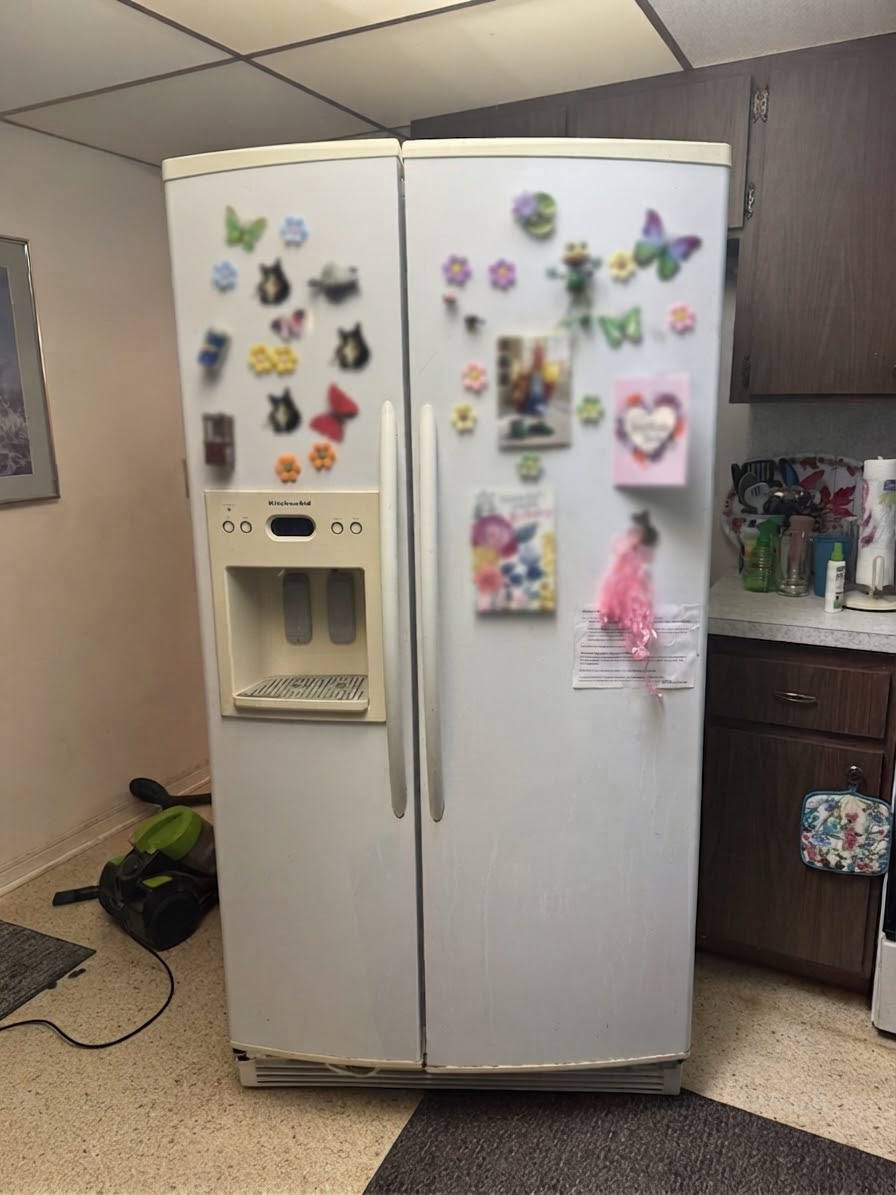
There is something truly remarkable about high-build quality appliances. We responded to a service call in Fort Lauderdale for a 20-year-old KitchenAid refrigerator that had stopped cooling. Remarkably, this unit had operated flawlessly for two decades without needing a single service call—a testament to the original build quality of classic KitchenAid refrigerators.
Diagnosing the Cooling Failure
When a refrigerator lights remain on and internal fans are spinning, but the cabinet fails to stay cold, the compressor assembly is the first area to inspect. During our diagnostic check, we heard the telltale click of the overload protector trying to engage the compressor without success. Upon removing the rear access panel, visual and multimeter inspection confirmed that the compressor start relay had completely burned out.
Step-by-Step Repair Process
Safety & Cabinet Access
Disconnected electrical power to the unit and accessed the lower compressor compartment at the rear of the refrigerator.
Testing Compressor Windings
Removed the scorched start relay and tested the compressor terminal pins with an ohmmeter to verify that the compressor windings were intact and grounded properly.
Installing New Start Relay
Replaced the damaged component with a new OEM KitchenAid compressor start relay and overload assembly.
Condenser Coil Maintenance
Thoroughly vacuumed accumulated lint and dust from the condenser coils and surrounding compressor bay to ensure proper heat airflow.
Restored to Peak Operating Condition
Once power was restored, the compressor kicked on immediately and pulled normal operating amperage. In under 30 minutes, this classic KitchenAid unit was back up and running smoothly, ready to provide many more years of reliable service.