The Service Call: Sanitize Cycle Aborting Mid-Wash
A homeowner in Plantation reached out to iFixExpress regarding their Kenmore built-in dishwasher. The unit worked adequately on a basic cycle, but whenever the Sanitize option was engaged, the machine would halt midway through the wash phase, drain, and start flashing the Clean light seven times consecutively. Without the sanitizing rinse reaching the required target temperature, dishes were left wet and unsterilized.
Understanding the Kenmore 7-Blink Error Code
On Kenmore dishwashers (built on the Whirlpool modular platform), a sequence of seven continuous flashes indicates a heating circuit fault. The control board monitors the water temperature using a thermistor (OWI sensor). If the water does not rise by a predetermined number of degrees within a set time frame—especially critical during the high-heat Sanitize profile—the control aborts the cycle to prevent runaway energy use and warns the user with the 7-blink diagnostic code.
Power Isolation & Extraction
We switched off the dedicated 15-amp circuit breaker at the main distribution panel, unbolted the counter mounting clips, disconnected the kickplate, and eased the dishwasher out from beneath the granite countertop to access the underside components.
Electrical Resistance Testing
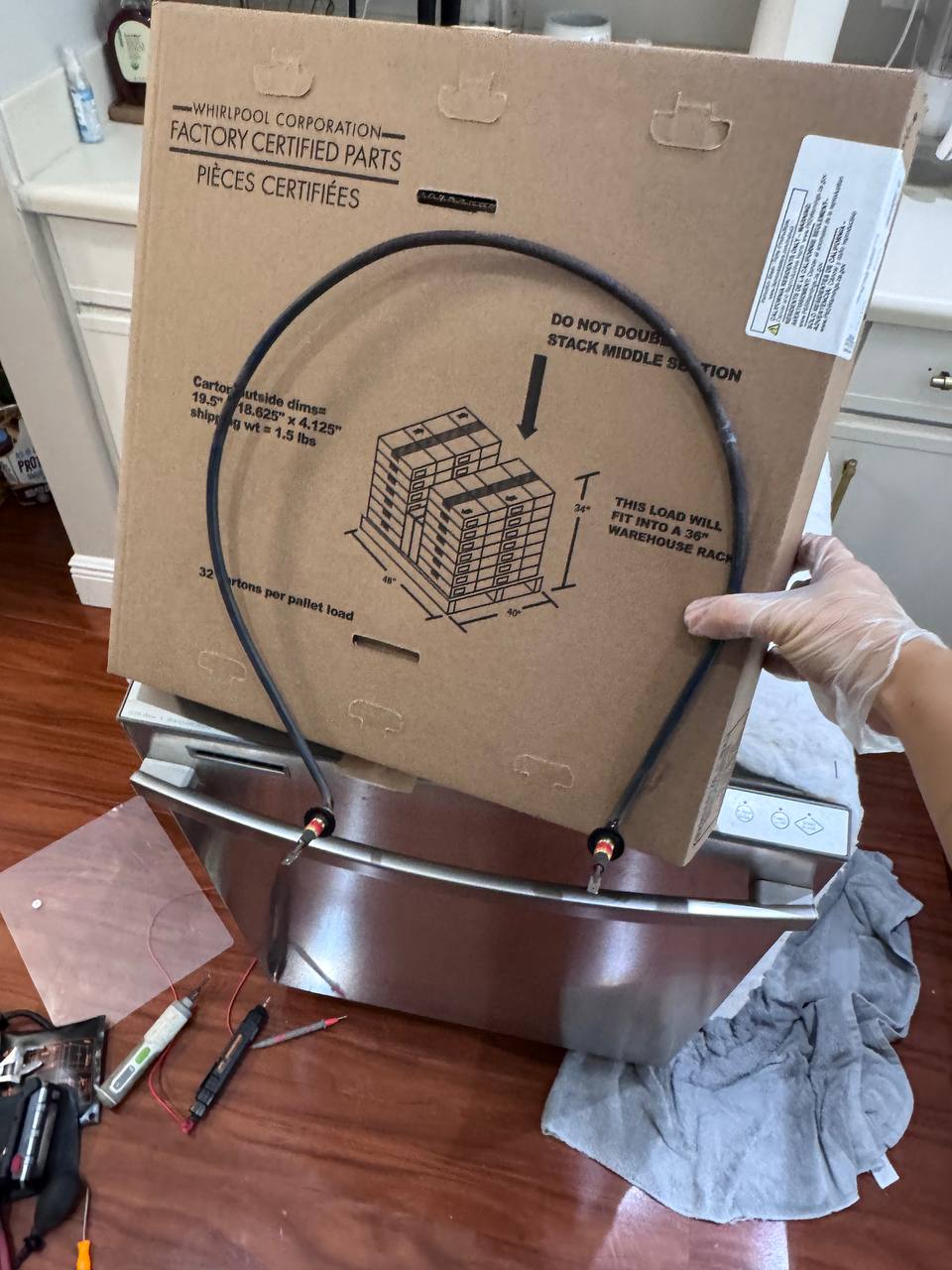
We located the heater element terminals under the tub basin. After slipping off the wire harnesses, we set our digital multimeter to measure resistance (Ohms). A functioning Kenmore heating element should read between 10 and 30 Ohms. Our meter showed infinite resistance (O.L.), confirming the element's internal filament had fractured, causing an open circuit.
Thermal Fuse & Wiring Inspection
We verified the high-limit thermostat (thermal cut-off) mounted to the tub bottom and inspected the wire harness for heat scoring or corrosion. Both the thermostat and wiring passed continuity and visual tests with zero resistance anomalies.
Fast Same-Day Replacement
Because heating failures are standard service events for Broward County kitchens, our service van carried the exact OEM Kenmore/Whirlpool Calrod heating element assembly and replacement seal nuts.
We unthreaded the plastic mounting nuts beneath the tub basin, carefully withdrew the compromised heating coil from inside the stainless interior, and thoroughly cleaned the rubber mounting grommet seats. The new factory element was positioned into its interior retention brackets, secured from below to ensure a watertight seal, and reconnected to the wire terminals.
Resetting the Control and Verification
Once the machine was slid back into place, leveled, and secured, we restored electrical power and initiated the onboard diagnostic cycle to clear the 7-blink lock from the control board's memory. We ran a heated test cycle, tracking the live amp draw through our clamp meter. The element pulled normal operating amperage, heated the water properly, and executed the sanitize cycle cleanly without stopping.