The Service Call: A Dryer That Heats But Won't Dry
We recently received a service call from a homeowner in Coral Springs who was frustrated with their dryer. The appliance was running, the drum was tumbling, and they could feel heat radiating from the machine, yet their clothes remained damp even after multiple consecutive cycles. Suspecting a failing heating element or a faulty thermostat, they reached out to the team at iFixExpress for a professional diagnosis.
The Diagnostic Process
When our technician arrived at the Coral Springs residence, we initiated a systematic inspection to isolate the issue. Many homeowners assume that if a dryer isn't drying, the heating system must be broken. However, proper diagnostics often reveal a different story.
Testing the Internals
We started the dryer and verified that the drum was tumbling smoothly. We then measured the internal temperature and confirmed that the heating element was cycling on and off exactly as designed. The appliance itself was mechanically and electrically sound.
Checking the Airflow
A dryer relies on two main factors to dry clothes: heat and airflow. Since we had heat, we checked the airflow. We felt very little air escaping from the exterior exhaust hood, indicating a major restriction somewhere in the line.
Inspecting Behind the Unit
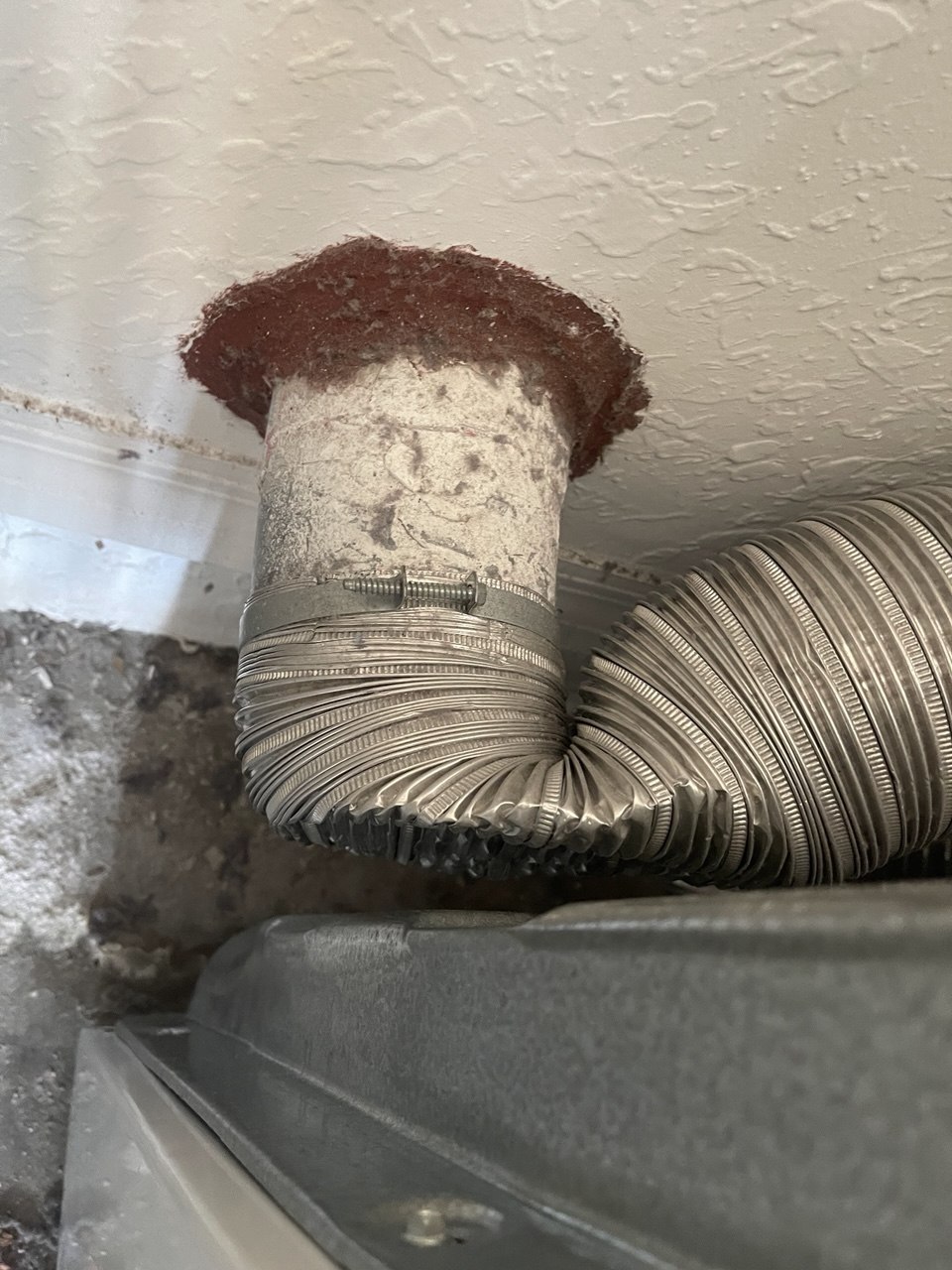
We carefully pulled the dryer away from the wall to inspect the flexible transition duct. Immediately, the culprit was revealed: the foil vent hose was completely crushed and bent flat against the drywall.
The Solution: Restoring Airflow
The dryer had been pushed too close to the laundry room wall, likely during a recent cleaning or simply from the natural vibration of the machine over time. This physical restriction completely choked off the exhaust air, trapping moisture inside the drum and preventing the clothes from drying.
Our technician reshaped the bent transition vent, ensuring there were no kinks or tears in the material, and securely reattached it to both the dryer exhaust outlet and the wall duct. We then pushed the dryer back into place, taking care to leave an adequate gap.
Technician Tip: Always leave at least 4 to 6 inches of clearance between your dryer and the wall. Pushing the appliance too far back can crush the vent, which not only ruins drying performance but also creates a major fire hazard due to lint accumulation.
The Outcome
After securing the connection, we ran a test cycle. The hot, moisture-laden air was immediately able to exhaust freely out of the home. The dryer was back to peak efficiency without requiring any expensive replacement parts.