The Call: Random Mid-Cycle Shutoffs
A homeowner in Dania Beach reached out to iFixExpress reporting that their Amana electric dryer would start normally, run for a few minutes, and then abruptly cut off without warning. After sitting idle for a while, it would occasionally start back up, only to stall again shortly after. While intermittent shutoffs can sometimes point to failing motor windings or a cycling thermostat, our initial visual inspection quickly shifted the diagnosis to an immediate electrical hazard.
The Inspection: A Severe Electrical Hazard
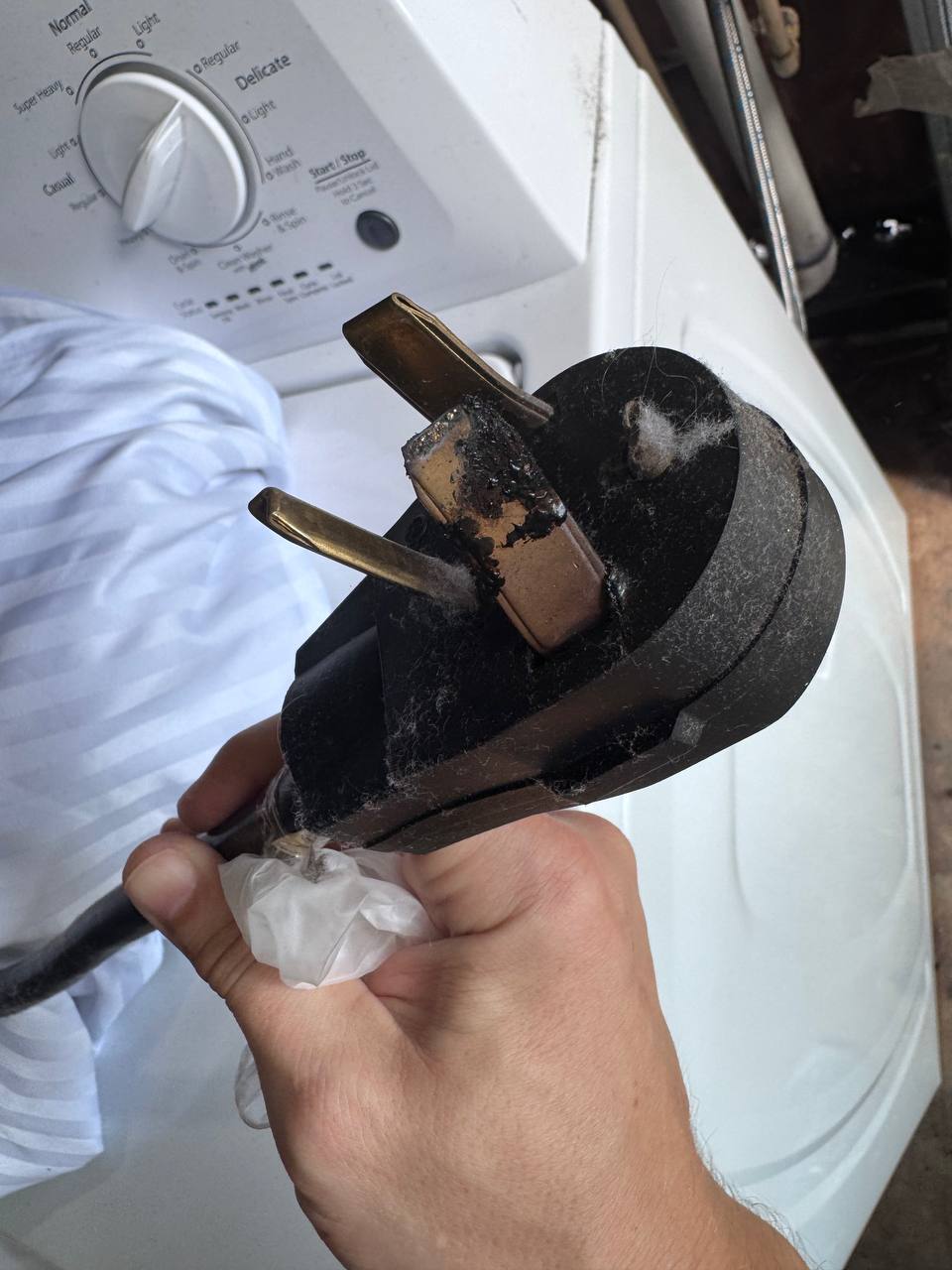
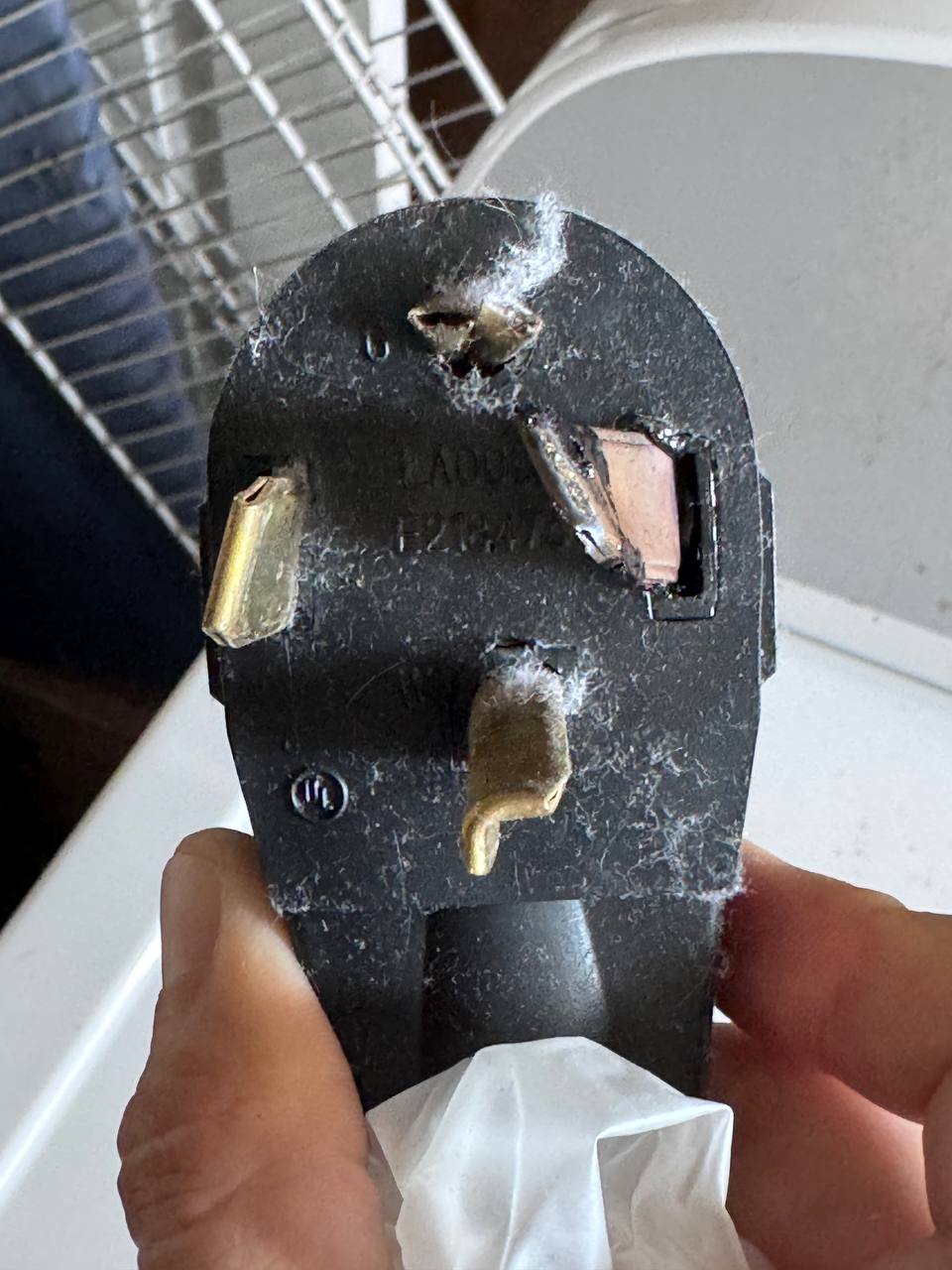
Before pulling out multi-meters or opening the cabinet, standard safety protocol requires verifying line voltage and checking the power connection. When grabbing the heavy rubberized plug from the 240V wall receptacle, the plug head was noticeably hot to the touch. Upon carefully pulling the plug from the receptacle, the danger was immediately obvious: one of the hot prongs was blistered and charred, and the surrounding plastic had begun melting.
Critical Safety Notice: Never alter or bend the prongs of an appliance power cord to match an incompatible receptacle. 240V clothes dryers pull up to 30 amps; loose connections create high-resistance heat that can easily trigger an in-wall electrical fire.
A closer look revealed what had happened: during a previous installation or move, someone discovered the dryer had a standard 4-prong NEMA 14-30P cord, but the laundry wall outlet was an older 3-slot NEMA 10-30R receptacle. Rather than replacing the cord with the correct factory-certified 3-prong assembly, someone deliberately snipped off one of the prongs with wire cutters and manually bent the remaining three prongs with pliers to force them into the wall receptacle.
Why This Modification Fails
When the prongs were bent, they lost full surface contact inside the wall receptacle's spring contacts. Poor electrical surface area creates extreme electrical resistance. Under a standard 20 to 30 amp heating load, this resistance generated intense heat, melting the plug head and causing voltage drops that starved the dryer motor and control electronics, causing the random mid-cycle shutdowns.
The Step-by-Step Resolution
Power Cut & Outlet Inspection
We switched off the dual-pole 30-amp breaker at the main electrical panel and thoroughly inspected the Dania Beach home's wall outlet to ensure the internal receptacle contacts were not permanently compromised by heat damage.
Terminal Block Access
We removed the access cover on the back of the Amana dryer to expose the three-terminal connection block, strain relief clamp, and grounding screw.
Removal of Damaged Cord
We loosened the hot and neutral terminal lugs, unscrewed the chassis ground screw, and discarded the dangerously modified, burnt cord assembly.
Proper 3-Wire Cord Installation
We installed a heavy-duty UL-listed 3-prong (NEMA 10-30P) power whip. Per National Electrical Code (NEC) guidelines for existing 3-wire systems, we securely bonded the dryer's neutral center terminal to the appliance chassis ground strap, tightened all terminal lugs to spec, and clamped the metal strain relief collar.
Thermal & Functional Testing
We powered the breaker back on, verified balanced line voltage (240V between hot legs, 120V to neutral), and ran the dryer on full high heat for 15 minutes. An infrared thermal scanner confirmed the plug and wall plate stayed cool.
Outcome & Prevention
The entire repair was completed in roughly half an hour from our fully stocked service van. The dryer returned to smooth, continuous operation without unexpected shutoffs. Most importantly, a catastrophic fire hazard was eliminated before it caused damage to the homeowner's laundry room or electrical panel.